The gaming monitor market is moving faster than almost any other PC component. Over the last few years, refresh rates jumped from 144Hz to 240Hz and even 360Hz, OLED panels entered the mainstream, response times dropped to near-instant levels, and features like variable refresh rate, HDR, and mini-LED backlighting became common. As we move into 2026, the question is no longer whether gaming monitors will improve, but how far they will go.
In 2026, gaming monitors are expected to focus heavily on three things speed, visual realism, and immersion. Higher refresh rates paired with more efficient panel technology are likely to make motion clarity even closer to real life.
OLED and advanced mini-LED displays are expected to become more refined, addressing issues like brightness, burn-in resistance, and text clarity while delivering deeper contrast and faster pixel response than traditional LCDs. Resolution trends are also shifting, with more gamers demanding high refresh 4K and ultrawide formats instead of choosing between clarity and smoothness.
This guide looks ahead at what gamers can realistically expect from gaming monitors in 2026. From next-generation panel types and higher refresh ceilings to smarter HDR, better connectivity, and new competitive features, understanding where the industry is going helps you avoid buying outdated tech and prepares you to choose a display that will stay relevant for years.
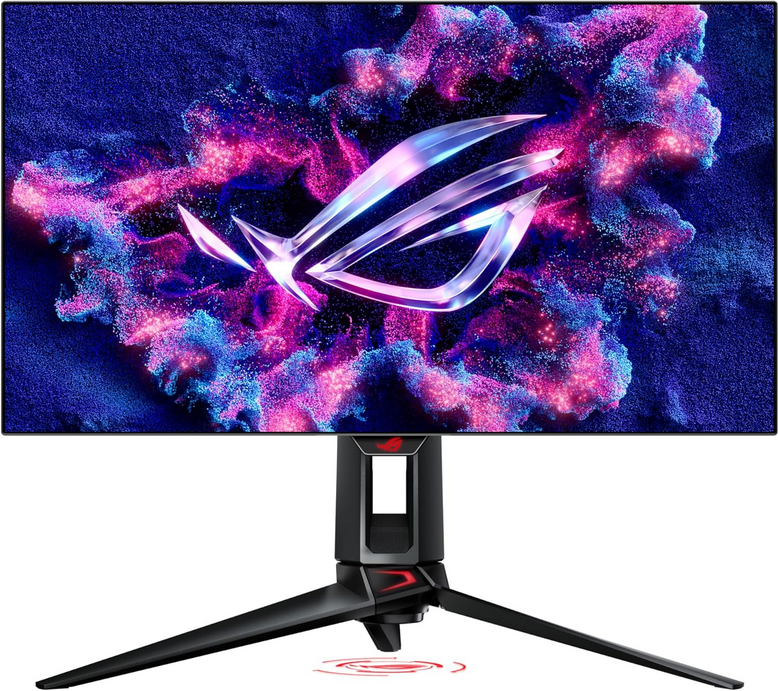
ASUS ROG Swift OLED PG27AQDP
Key Specifications
• Panel Size: 26.5 inches (27-inch class)
• Resolution: 2560×1440 (QHD)
• Panel Type: WOLED
• Refresh Rate: 480Hz
• Response Time: 0.03ms (GTG)
• Peak HDR Brightness: 1,300 cd/m²
• Contrast Ratio: 1,500,000:1
• Color Gamut: 99% DCI-P3, 135% sRGB
• Color Accuracy: ΔE < 2
• Color Depth: 10-bit (1.07 billion colors)
• Connectivity: DisplayPort 1.4 (DSC), HDMI 2.1, USB hub
• Adaptive Sync: FreeSync Premium, G-SYNC Compatible
• Mounting: VESA 100×100
• Panel Care: ASUS OLED Care+ with burn-in protection
Features Explained
The ASUS ROG Swift OLED PG27AQDP represents the extreme competitive end of gaming monitors. It is the world’s first 1440p OLED monitor to reach a 480Hz refresh rate, pushing motion clarity into territory previously only possible on low-resolution esports panels. Combined with an ultra-fast 0.03ms response time, this monitor is built for players who care about reaction speed, motion precision, and absolute smoothness above everything else.
Despite its esports focus, it does not sacrifice image quality. The WOLED panel delivers true blacks, extremely high contrast, and vibrant colors with professional-grade factory calibration. ASUS adds a full OLED care system, AI-based gaming features, extreme low motion blur support, and premium ergonomics. This is a showcase monitor for what ultra-high refresh OLED gaming will look like going forward.
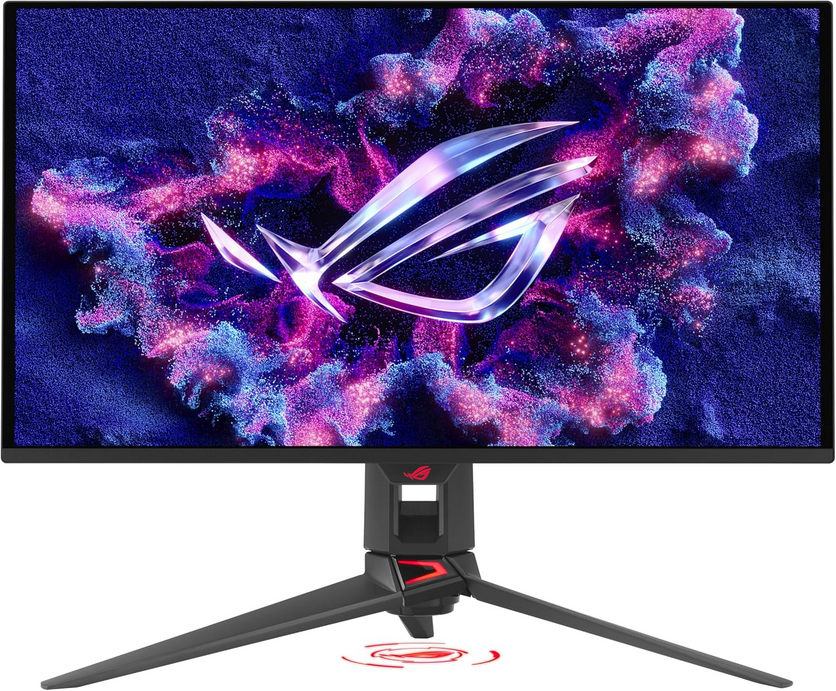
ASUS ROG Swift OLED PG27UCDM
Key Specifications
• Panel Size: 26.5 inches (27-inch class)
• Resolution: 3840×2160 (4K UHD)
• Panel Type: QD-OLED
• Refresh Rate: 240Hz
• Response Time: 0.03ms
• Peak HDR Brightness: 1,000 cd/m²
• Contrast Ratio: 1,500,000:1
• Color Gamut: 99% DCI-P3, 145% sRGB
• Color Depth: 10-bit
• Connectivity: DisplayPort 2.1, HDMI 2.1, USB-C with 90W power delivery
• Adaptive Sync: FreeSync Premium Pro, G-SYNC Compatible
• HDR Support: HDR10, Dolby Vision
• Panel Care: ASUS OLED Care Pro
Features Explained
The PG27UCDM targets gamers who want both extreme clarity and elite-level performance. With a 4K resolution running at 240Hz, this display is built for next-generation GPUs and represents where premium gaming monitors are heading. The QD-OLED panel delivers exceptional brightness, extremely pure colors, and razor-sharp pixel detail that standard LCDs struggle to approach.
It also focuses heavily on versatility. DisplayPort 2.1 unlocks full-bandwidth 4K high refresh gaming, while USB-C with 90W power delivery makes it ideal for hybrid laptop and desktop setups. With built-in KVM functionality, advanced burn-in protection, and true HDR capabilities, this monitor is positioned as a high-end centerpiece display for gaming, content creation, and professional work.
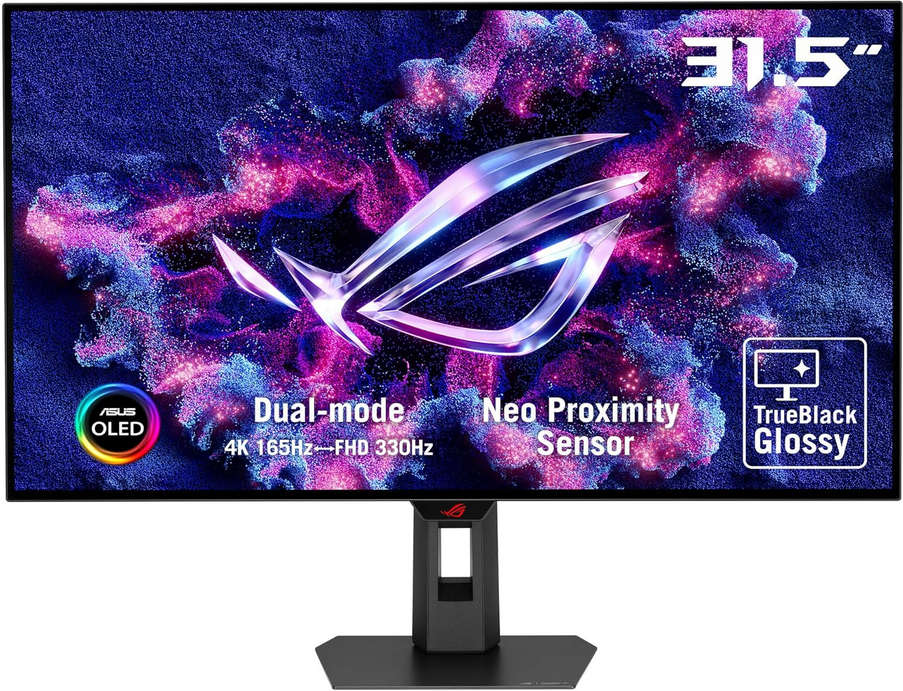
ASUS ROG Strix OLED XG32UCWMG
Key Specifications
• Panel Size: 31.5 inches (32-inch class)
• Resolution: 3840×2160 (4K UHD)
• Panel Type: WOLED with TrueBlack glossy coating
• Refresh Rate: 240Hz (480Hz at 1080p dual-mode)
• Response Time: 0.03ms
• Peak HDR Brightness: 1,300 nits
• Connectivity: HDMI 2.1, DisplayPort, USB-C
• Special Modes: Dual-mode resolution switching
• Panel Care: ASUS OLED Care Pro
Features Explained
The XG32UCWMG introduces a new direction for gaming monitors by offering a true dual-mode experience. It can run as a large, immersive 4K 240Hz display for cinematic and AAA gaming, or instantly switch into a 1080p 480Hz esports monitor for competitive play. This flexibility is extremely important going into 2026, where gamers increasingly want one display that can serve both performance and immersion.
The glossy TrueBlack coating significantly improves perceived sharpness, contrast depth, and color richness compared to traditional matte OLED finishes. Combined with proximity sensing, advanced burn-in prevention, KVM support, and picture-in-picture features, this monitor is built for premium multi-use gaming setups where visual quality and speed are equally important.
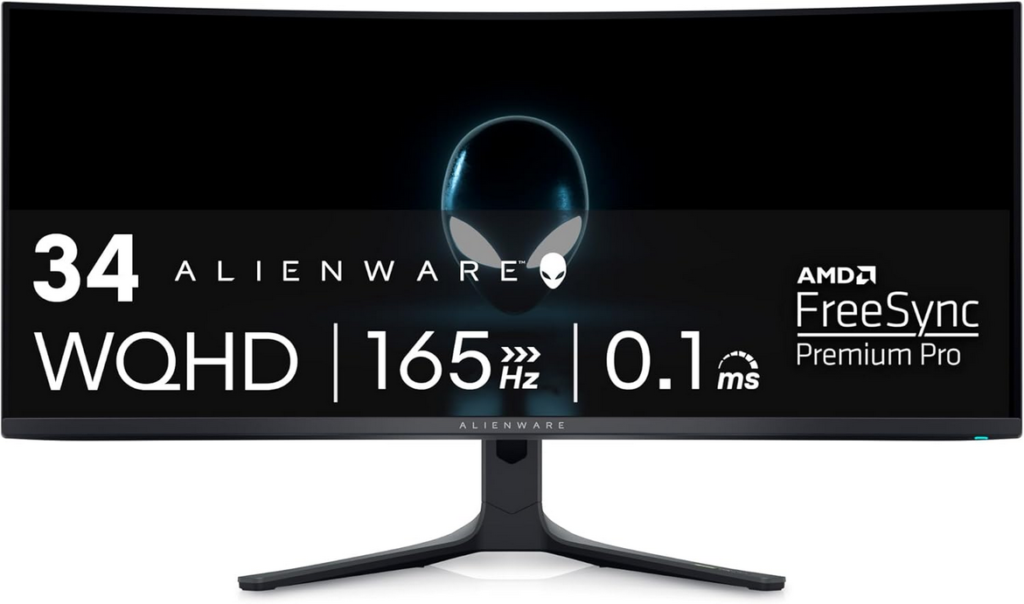
Alienware AW3423DWF
Key Specifications
• Panel Size: 34 inches
• Resolution: 3440×1440 (Ultrawide QHD)
• Panel Type: QD-OLED
• Refresh Rate: 165Hz
• Aspect Ratio: 21:9
• Curvature: 1800R
• Adaptive Sync: AMD FreeSync
Features Explained
The AW3423DWF remains one of the most influential ultrawide OLED gaming monitors and represents what immersive gaming displays will continue to emphasize in 2026. Its QD-OLED panel delivers deep blacks, excellent brightness, and rich color volume that makes games feel cinematic and lifelike. The 21:9 aspect ratio significantly expands field of view, creating a much stronger sense of depth and scale in supported titles.
This monitor is especially popular because it balances performance and immersion. The 165Hz refresh rate keeps gameplay fluid, while the ultrawide format enhances racing games, RPGs, flight simulators, and open-world experiences. It also performs exceptionally well in HDR content, making it a strong example of how QD-OLED has reshaped the gaming monitor market.
AOC Q27G3XMN
Key Specifications
• Panel Size: 27 inches
• Resolution: 2560×1440 (QHD)
• Panel Type: Mini-LED LCD
• Refresh Rate: High refresh, esports-ready
• Backlight: Mini-LED local dimming
Features Explained
The AOC Q27G3XMN shows how advanced display technologies are filtering into more affordable gaming monitors. By using Mini-LED backlighting instead of standard edge-lit LCD, it delivers much stronger contrast, deeper blacks, and more convincing HDR effects. This dramatically improves visual quality in dark scenes, horror games, and cinematic titles.
At the same time, it maintains the speed gamers expect. Its high refresh design makes it suitable for competitive gaming while keeping the sharpness of 1440p resolution. This kind of monitor represents an important 2026 trend: strong performance, good HDR, and high clarity becoming accessible without needing to move into premium OLED pricing.
How to Select the Best Gaming Monitors in 2026?
Choosing the best gaming monitor in 2026 is a mix of understanding what matters most for your style of gaming and knowing where display technology is headed. In the past, being a “good gaming monitor” meant one thing: a high refresh rate.
That’s no longer true. By 2026, a great gaming monitor needs to balance speed, resolution, image quality, responsiveness, and smart features. You need to decide what matters most to you: blistering competitive performance, cinematic immersion, a mix of both, or hybrid use with creative work and media.
First, think about how you play and what you own. Competitive esports players should prioritize refresh rates and response time first. The higher the refresh rate, the smoother and more instantaneous the on-screen action feels.
In 2026, values like 480Hz and beyond are no longer futuristic outliers; they are the new competitive standard for fast-paced shooters, fighting games, and first-person multiplayer titles. Conversely, if you prefer AAA story-driven games, RPGs, or titles with rich visuals, resolution and panel quality become much more important.
Second, make sure your hardware and connectivity support what you choose. Next-generation GPUs and consoles increasingly push more pixels at higher refresh rates. Without the proper ports (such as DisplayPort 2.1 or HDMI 2.1 with high bandwidth), you can’t fully use features like 4K at 240Hz. Adaptive sync technologies like FreeSync Premium Pro and G-SYNC compatibility matter because they eliminate tearing and reduce stutter, which dramatically helps responsiveness.
Finally, don’t ignore real-world factors like comfort, ergonomics, and smart features. In 2026, many high-end panels include advanced HDR performance, improved motion clarity technologies, and even AI-driven enhancements that adjust visuals based on what is on the screen.
In 2026, selecting the best gaming monitor is both simpler and more nuanced than before. Simpler because technology has matured and clear patterns of what works the best have emerged; more nuanced because there is no single “perfect” monitor for everyone.
The right choice depends on your priorities, your hardware, and how you balance speed, visuals, and everyday comfort. By focusing on these core principles, you’ll avoid hype and find a display that genuinely elevates your gaming experience.
Gaming Monitor Comparison Summary
The gaming monitors featured in this guide clearly show where the industry is heading in 2026. Instead of one “best” type of display, the market is now divided into performance-first, immersion-first, and balanced all-rounder monitors.
Ultra-high refresh OLED panels are pushing competitive gaming to new limits, while high-resolution QD-OLED and large-format OLED displays are redefining how cinematic and open-world games look and feel. At the same time, Mini-LED technology is making strong contrast and high refresh rates accessible to more gamers.
What matters most is how closely a monitor matches your gaming style and hardware. Players focused on esports and fast shooters benefit most from extreme refresh rates and instant response times. Gamers who care more about visuals, HDR, and realism gain far more from 4K, ultrawide, and OLED-based panels. Balanced and dual-mode monitors are becoming increasingly important, letting one screen serve both competitive and immersive gaming without compromise.
Quick Comparison Highlights
• Ultra-high refresh OLED monitors dominate competitive gaming
• 4K high-refresh QD-OLED displays define the premium all-around category
• Dual-mode monitors blur the line between esports and cinematic play
• Ultrawide OLED panels deliver the strongest sense of immersion
• Mini-LED monitors offer the best value mix of speed and image quality
Final Verdict
Gaming monitors in 2026 are no longer about chasing a single specification. They are about building an experience. The current generation of displays shows a clear shift toward specialization. Some monitors are engineered purely for competitive dominance with extreme refresh rates and near-instant response times.
Others focus on immersion through OLED contrast, higher resolutions, ultrawide formats, and true HDR performance. And increasingly, a new class of displays is emerging that blends both worlds, giving gamers the freedom to switch between cinematic and esports-focused performance on the same screen.
The best gaming monitor in 2026 is the one that fits your gaming identity. If your priority is winning fast-paced matches, ultra-high refresh OLED panels deliver an advantage that older displays simply cannot match. If your goal is immersion, visual realism, and next-generation graphics, high-refresh 4K and ultrawide OLED monitors transform how games look and feel. If you want versatility, dual-mode and feature-rich displays offer the strongest long-term value.
Ultimately, the smartest choice is not the most expensive or the newest model. It is the monitor that matches your GPU power, desk space, and the way you actually play. When those align, a gaming monitor stops being just a screen and becomes one of the most important upgrades in your entire setup.