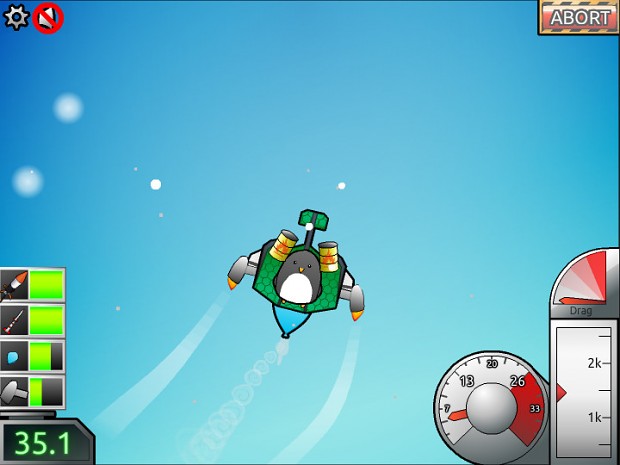
Learn to Fly 3 looks simple at first. You launch a penguin, boost through the air, crash, upgrade, and repeat. But once you play for a while, you quickly realize this game is not just about clicking launch and hoping for the best. It is a physics-based progression game where small decisions about upgrades, timing, and angles completely change how far and how high you can fly.
Many players get stuck early or mid-game. They stop gaining distance, money feels slow, and no matter what they upgrade, progress feels random. That usually happens because they are upgrading without a clear strategy. Learn to Fly 3 rewards planning. Understanding how engines, boosters, gliders, fuel, and weight work together is what turns short hops into massive flights.
In this guide, you will find practical tips and tricks for every stage of the game. From early-game money strategies to advanced flight control and hidden mechanics, this article is built to help you fly farther, climb higher, and unlock the game’s full potential much faster.
Basics Every Player Should Understand
Before focusing on advanced tricks or expensive upgrades, it’s important to understand how Learn to Fly 3 actually works. The game is not only about distance. It is built around a mix of horizontal travel, vertical height, speed control, and boost management.
Every successful long flight balances all four. If you only focus on power, you crash early. If you only focus on height, you stall and fall. Progress comes from combining the right parts with the right timing.
One of the most important things to learn early is how launch physics affect the entire run. Your sled, glider, and engine determine how much speed you start with, how well you climb, and how efficiently you stay airborne. A bad launch angle or an unbalanced setup can ruin a run before you even touch your boosters. Smooth early acceleration creates momentum, and momentum is what makes long flights possible.
Money progression is another core mechanic players often misunderstand. You are not meant to break records every single flight. The game is designed around incremental improvement. Short flights build income. Income builds upgrades. Upgrades unlock longer flights. Trying to skip this loop usually causes frustration. Consistent medium flights often earn more money than risky launches that fail early.
Finally, understand that weight and efficiency matter just as much as raw power. Every engine, booster, and body part affects drag, stability, and fuel use. A heavier setup needs more thrust and better timing. A lighter setup may go higher but struggle to maintain speed. The best builds are not the strongest ones. They are the most balanced ones.
Once these basics are clear, every tip and trick becomes easier to apply, and your progress becomes predictable instead of random.
Best Early Game Tips
The early game in Learn to Fly 3 is where most players either build momentum or get stuck. The biggest mistake beginners make is trying to fly far immediately instead of trying to build income efficiently. At this stage, your goal is not record-breaking flights. Your goal is to create consistent runs that earn steady money and unlock upgrades faster.
One of the smartest early strategies is to upgrade core performance before special parts. Focus first on improving your main engine, basic glider, and fuel capacity. These upgrades increase both distance and airtime, which directly raises your earnings per flight. Boosters are helpful, but early on they work best as support, not as the main source of movement.
Another key early tip is to control your launch instead of spamming boost. A smooth takeoff that builds horizontal speed before climbing gives you far better momentum. Use small bursts of boost to stabilize your angle rather than emptying your fuel immediately. This prevents early stalls and keeps your penguin flying longer, which almost always earns more money.
Also, pay attention to what actually makes you money. Longer airtime and distance usually pay more than height alone. If a setup sends you straight up and drops you quickly, it may look impressive but often pays less than a flatter, longer glide. Adjust your parts to favor sustained flight rather than dramatic vertical launches.
Finally, do not ignore cheap upgrades. Small improvements stack quickly in Learn to Fly 3. Multiple low-cost upgrades often outperform one expensive part. Build a stable foundation, then move toward experimental or extreme builds later.
Once your income becomes steady and your flights predictable, the mid-game opens up naturally and progress becomes much faster.
Best Mid-Game Strategies
• Start building for balance, not just power: Mid-game is where raw power alone stops working. Focus on setups that balance speed, lift, fuel efficiency, and stability. A balanced build stays airborne longer, earns more money, and makes booster timing much more effective.
• Choose gliders and sleds based on control, not looks: Some bodies climb fast but bleed speed. Others maintain momentum but struggle to gain height. Test parts and observe how they affect your early launch, mid-air stability, and glide time. Mid-game success comes from controlled flight, not explosive starts.
• Chain boosters instead of using them all at once: Avoid dumping all your boost early. Use boosters in short, controlled bursts to correct your angle, regain speed after climbing, or extend airtime near the peak of your flight. Smart chaining dramatically increases distance and income.
• Optimize for airtime, not just peak height: Very high launches often end quickly. Builds that stay airborne longer usually earn more and travel farther. Prioritize upgrades that help sustain flight and reduce fall speed.
• Use upgrades to fix weaknesses, not to stack strengths: If your flight stalls, upgrade thrust or fuel. If you fall too fast, upgrade glide or stability. Mid-game progress accelerates when you solve problems instead of reinforcing what already works.
• Experiment often and track results: Mid-game is where experimentation pays off. Try different combinations and notice which ones increase distance, which improve height, and which give longer airtime. Keep refining instead of committing to one setup too early.
• Invest in efficiency upgrades early: Upgrades that reduce drag, improve fuel use, or stabilize flight compound across every run. These often outperform flashy parts over time.
Secret Mechanics and Pro-Level Tricks
At higher levels, Learn to Fly 3 becomes less about buying stronger parts and more about understanding hidden mechanics. Momentum is the real engine of long flights. The best runs are built on smooth acceleration, shallow launch angles, and preserving forward speed before climbing. Pro-level flights rarely shoot straight up.
They build horizontal velocity first, then convert that speed into height and distance. Another key mechanic many players miss is gravity management. Letting your penguin fall slightly before boosting forward uses gravity to increase speed instead of fighting it, which leads to longer airtime and much greater total distance.
Another major difference between average and top-level play is control and efficiency. Stability-focused upgrades quietly increase distance by keeping your craft at optimal angles and reducing wasted motion. Lighter, more efficient builds often outperform heavy ones because every boost gives more usable movement.
Skilled players also time their boosts near the peak of flights or during descent, extending airtime instead of burning fuel early. These small decisions compound over a run. Once you start treating each flight like a controlled glide instead of a launch-and-pray attempt, distances grow dramatically and consistently.
Common Mistakes to Avoid
One of the biggest mistakes in Learn to Fly 3 is overvaluing raw power. Many players rush to buy the strongest engines and boosters and expect instant results, but without balance, these parts often make flights worse.
Heavy builds stall faster, burn fuel inefficiently, and crash sooner. Another common problem is launching too steeply. Straight-up launches feel powerful, but they kill forward momentum and usually result in short, unprofitable runs. Consistent progress comes from controlled speed, not vertical bursts.
Another frequent mistake is wasting boosts early. Emptying fuel at the start of a flight often creates a dramatic climb followed by a fast drop. Skilled runs save fuel for mid-air corrections, re-acceleration, and late-flight extension.
Players also tend to ignore stability and glide upgrades, even though these quietly increase both airtime and distance. Finally, many people get stuck because they chase record flights instead of steady income. Medium, repeatable runs usually earn more money than risky attempts, and money is what actually unlocks progress.
Conclusion
Learn to Fly 3 rewards patience, balance, and understanding far more than brute force. The players who progress fastest are not the ones who launch the hardest, but the ones who build efficient setups, manage momentum, and make smart upgrade choices. Once you understand how speed, height, fuel, and stability work together, the game stops feeling random and starts feeling controllable.
As you move forward, focus on consistency over lucky runs. Build momentum before climbing, save boosts for when they matter most, and upgrade to fix weaknesses instead of stacking power. Experiment often, observe how small changes affect your flights, and refine your builds over time.
When you do that, distance and height naturally follow. With the right approach, Learn to Fly 3 turns from a simple launch game into a deeply satisfying progression experience where every flight genuinely feels better than the last.
Frequently Asked Questions (FAQ)
How do you make money faster in Learn to Fly 3?
The fastest way to earn money is to focus on consistent medium-long flights instead of risky record attempts. Builds that stay airborne longer usually generate more income than builds that go straight up and crash quickly. Upgrade your main engine, fuel, and glide early so every run produces steady returns.
What should I upgrade first in Learn to Fly 3?
Early on, prioritize upgrades that improve base performance such as engine power, fuel capacity, and glide efficiency. These affect every flight and make boosters more effective later. Avoid spending everything on special parts before your core setup is strong.
Why do I keep stalling or dropping suddenly?
Stalling usually happens when a build is too heavy or climbs too steeply without enough forward speed. Try launching at a shallower angle, reduce unnecessary weight, and save boosts for mid-air corrections instead of using them all at the start.